Fasteners rarely get a second look. They hold chairs together, keep wheels attached, and lock panels onto machines that run day and night. Most people could walk past a thousand of them and never notice a thing. For a few industries, that invisibility is a risk. One failed screw can ground an airplane, force a medical recall, or weaken a joint that thousands cross daily. Small part, enormous consequences. That reality is why aircraft fasteners manufacturers treat every batch with obsessive care. The details that look like overkill on paper become essential after a failure. Here is what different industries demand from their hardware.
Aerospace fasteners live by stricter rules
An airliner wing is covered in thousands of rivets, each doing real work. Vibration, cabin pressure cycles, and temperature swings attack those joints on every flight. Loose hardware at 35,000 feet is an emergency, not a note. Aerospace fasteners are selected for fatigue life, not just strength. Every gram counts, because heavier hardware burns extra fuel for the entire life of the plane.
Engine sections get even hotter. Turbines soften ordinary steel, so nickel alloys keep their grip where the metal nearly glows. Traceability sets the leaders apart. Every lot ships with batch numbers and documents that follow the part for years. Auditors check that trail, and that is where aircraft fasteners manufacturers earn or lose trust.
Swiss screw machining shapes surgical hardware
Some of the smallest fasteners in the world live inside the human body. Bone screws, dental pins, and spinal implants screw into live bone and stay there for decades without causing any irritation. Size makes this brutally hard. Many parts are smaller than a grain of rice, and a thread cut a hair off spec ruins something you can barely hold with tweezers.
Swiss screw machining handles it well because the material stays still while cutting tools move. That stability keeps tolerances tight on tiny diameters. Materials narrow fast, since the body rejects most metals. Titanium and PEEK lead, and every cleaning and manufacturing step gets documented before anything touches a patient.
Automotive moves fasteners by the millions
No industry ships more hardware than automotive. One modern sedan carries several thousand pieces, from head bolts that clamp the engine together to clips nobody ever sees. Assembly lines cannot stop for a bolt that fits sometimes. Suppliers deliver massive batches with consistent quality, because a line stoppage costs real money.
Safety parts get extra attention. Brake caliper bolts and steering fasteners fail exactly once, and that failure sends a car off the road instead of back to the shop. Lighter bodies changed the approach too. Aluminum sheets do not lend themselves to welding, so we have moved on to self-piercing rivets and structural adhesives.
Construction leans on bolts and nuts daily
Bridges, stadiums, and towers stand because of steel connections nobody sees. Bolts and nuts carry huge loads through tension and shear, work welds cannot always handle.
Grades matter. Structural bolts carry stamped markings so inspectors can verify strength on sight. Mixing the wrong grade turns a safe design into a gamble.
Coatings follow the environment. Galvanized finishes protect outdoor steel from rain and road salt, while indoor joints get simpler treatment.
Inspectors keep revisiting critical connections for years. A structure is only as strong as the hardware holding its frame.
Energy sites punish fasteners for industrial applications
Oil rigs, refineries, wind farms, and mines sit far from any supplier. Fasteners for industrial applications must survive heat, saltwater, chemicals, and constant vibration for years straight. Galvanic corrosion is the silent killer. When two different metals meet in a wet environment, one begins to corrode gradually, which makes alloy selection and insulation a priority.
Failure here costs more than parts. A cracked stud on a pressure vessel or a loose flange on a gas line can mean explosions, spills, and investigations. That is why industrial fastening solutions ship with torque specs, coating records, and test data. Crews never guess what they installed.
Fastener materials worth knowing
Material choice decides how long a fastener survives in the field. Here is the honest breakdown.
- Titanium stays strong without heavy weight, which is why aircraft and implants lean on it
- Inconel keeps its strength at temperatures that soften other metals, so jet engines trust it
- Stainless steel shrugs off moisture and chemicals, making it the default for marine and food plants
- Heat-treated alloy steel carries big loads at a fair price, so cranes and bridges use plenty of it
- PEEK and other plastics resist chemicals without adding weight, though they bend before metal does
Signs a fastener will let you down
If you install or inspect hardware, learn to spot trouble before it finds you.
- Unmarked bolt heads give you no way to verify strength, so treat them as unproven
- Rust or pitting on fresh stock points to bad plating or damp storage. Corrosion spreads after installation
- Threads that gall while tightening usually mean mismatched materials or missing lubricant. Forcing them makes it worse
- Orders without documentation leave no proof of what the metal is or how it was treated. Certified industries reject that
- Fatigue cracks start small at stress points and spread silently. Finding them early beats replacing failed parts later
Quieter industries that lean on hardware
Aerospace and medicine grab attention, yet quieter sectors depend on fasteners just as hard.
- Telecom crews bolt antennas to towers that face wind, ice, and lightning for decades
- Ships and offshore platforms battle saltwater daily, so corrosion-resistant hardware is mandatory
- Rail networks need fasteners that absorb shock and vibration while keeping passengers safe
- Farm equipment rattles through dust and mud for years, and harvest downtime costs more than parts
- Even appliances hide dozens of screws and clips holding motors and panels together
Why the supplier behind the part matters
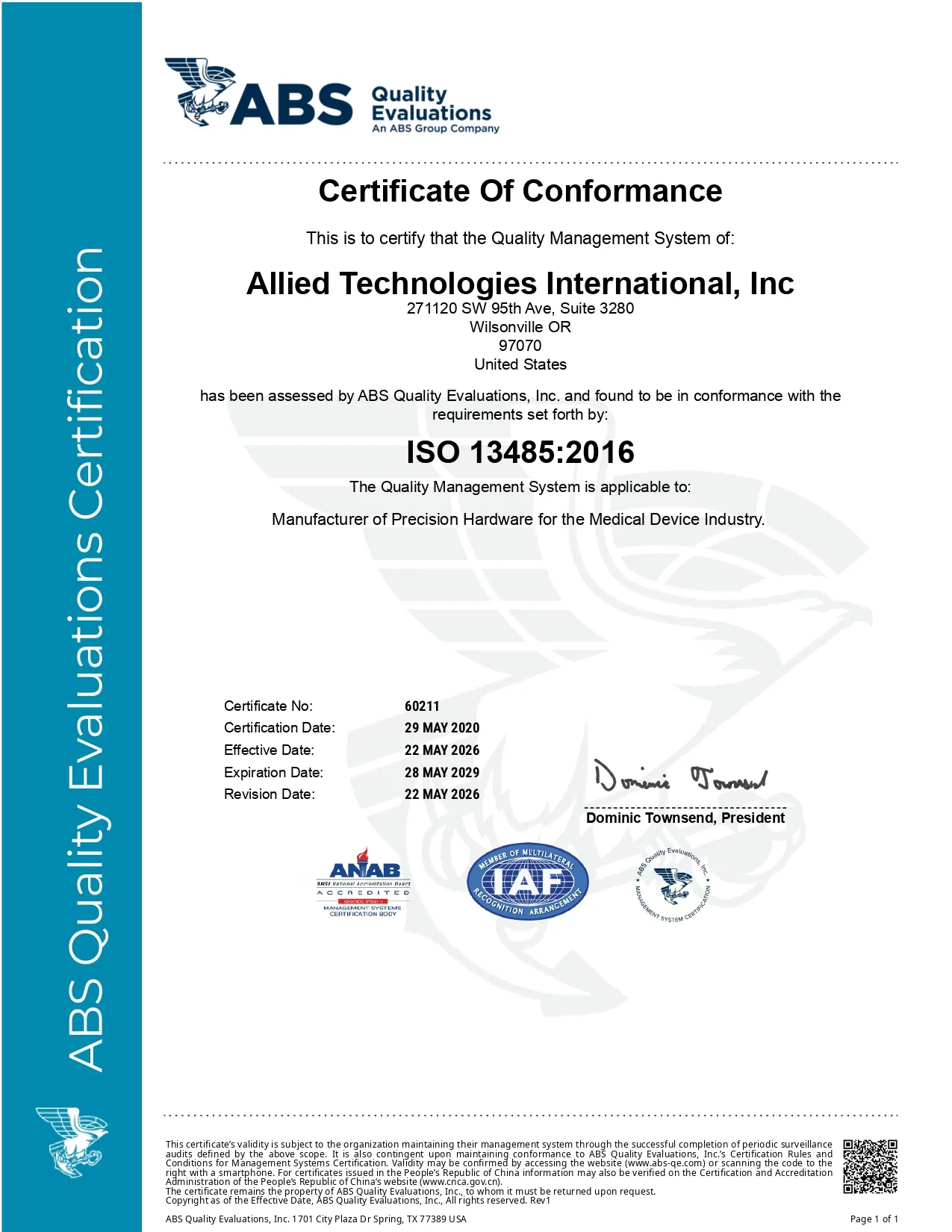
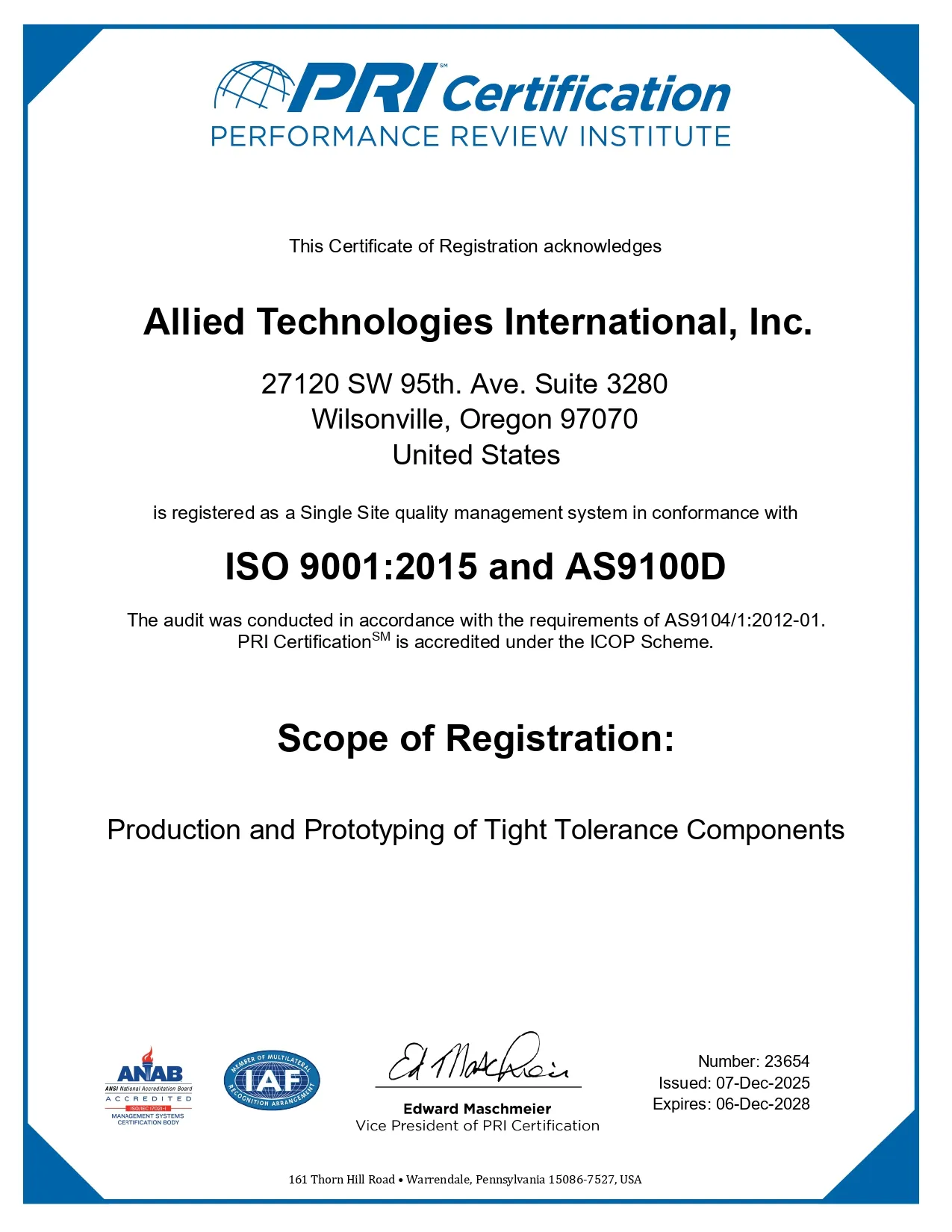
Allied Technologies International has spent years machining fasteners for clients who cannot afford failures. We have watched what corner-cutting does, and it is never pretty. Our Swiss-type CNC lathes machine microthreads and strange alloys that other shops don’t dare handle. Our quality management programs, such as AS9100D and ISO 13485, are just as rigorous as our machining process.
Allied Technologies International also welcomes comparisons with other aircraft fasteners manufacturers. Show us your drawing and your material spec, and we will tell you honestly what it takes. If your project depends on hardware that never fails, contact Allied Technologies International. The parts are only half the story. The documentation is the other half.
Ready to see how a supplier’s discipline changes your results?
Conclusion
Nobody claps for fasteners. They sit inside wings, walls, and engines, doing their job without thanks. Yet the industries that treat them with respect are the ones we trust with our lives. Look at any bridge you cross or any plane you board. Thousands of small parts hold the big idea together, and the suppliers who understand that small parts carry big responsibility are worth keeping.
That is the lesson every engineer learns eventually. Hardware is not the boring part of a project. It is what keeps everything else from falling apart, and aircraft fasteners manufacturers prove that discipline every single day.