If you strip modern construction down to what actually keeps things standing, it gets a lot less glamorous than people think. It is not just steel frames, glass, or concrete. It is the small connections between everything that decide whether a structure holds up for decades or starts failing quietly over time. Fasteners sit right in that space.
You do not really notice them, but they are everywhere. Inside bridges, engines, aircraft, power plants, and even basic infrastructure. Industrial fastener manufacturers are the ones making sure those small parts are not just “fitting,” but actually performing under pressure, vibration, heat, and time.
The global fasteners market is already worth over 90 billion dollars and is expected to push past 120 billion dollars within the next decade. That is not random growth. It reflects how heavily modern construction, automotive production, aerospace, and heavy industry depend on these components just to function at scale.
Why Fasteners are Central to Structural Reliability
A fastener does something very simple on paper. It connects two or more components. In reality, it is dealing with a constant force trying to pull those components apart. That includes load weight, vibration, shifting temperature, and long-term stress cycling.
Construction fasteners show up in everything from residential buildings to bridges, tunnels, stadiums, and industrial facilities. The expectation is always the same. They need to behave exactly the same way every single time. Not almost the same, not close enough, but identical in performance.
That is where industrial fastener manufacturers become critical. They are not just producing hardware. They are controlling the variables that engineers cannot afford to guess on. Material consistency, thread accuracy, tensile strength, and coating behavior. All of it matters.
Here is what people usually miss. Fastener failure is rarely sudden. It usually starts with tiny inconsistencies. Slight loosening. Minor corrosion. Uneven load distribution. Over time, that turns into structural risk.
And the scale makes it worse. Studies across construction supply chains show that billions of fasteners are installed globally every year. Even a very small failure rate becomes a serious issue when multiplied across entire cities and infrastructure networks.
Construction Depends on Precision and Uniformity
Construction is basically controlled uncertainty. Engineers design buildings assuming everything behaves within defined limits. Fasteners are a big part of that assumption. The problem is that real environments never stay still. Buildings move slightly under wind load. Materials expand and contract with heat. Vibration from traffic or machinery keeps acting on joints for years. Nothing is truly static.
If fasteners are inconsistent, those forces do not distribute evenly. One connection takes more stress than it should. Then another. Then fatigue starts building in places nobody is watching. This is why industrial fastening solutions matter more than most people realize. They reduce variation so systems behave predictably over time.
In practice, construction relies on fasteners for things like:
- Keeping structural loads distributed evenly so no single joint becomes a weak point
- Holding alignment under wind, seismic movement, and mechanical vibration
- Maintaining resistance against corrosion in exposed environments
- Allowing large-scale projects to be built with repeatable, standardized parts
None of this sounds exciting, but it is exactly what keeps infrastructure stable long after the construction crews leave.
Engineering Applications Demand Higher Precision Standards
Once you move into aerospace, defense, robotics, automotive systems, or medical devices, the tolerance for error drops dramatically. At that level, fasteners are not just connectors anymore. They are precision components that have to behave perfectly under extreme conditions.
Here is where CNC Swiss machining comes in. With the ability to create precise parts on a microscopic scale, manufacturers can achieve extremely close tolerances. This is critical since any variation in geometry or finish, however minute, may affect functionality in critical conditions.
In aerospace systems, fasteners deal with vibration levels and pressure changes that would damage ordinary hardware quickly. In medical equipment, they are often part of devices where failure is not just expensive but also dangerous. In precision machinery, they keep systems aligned when everything around them is constantly moving.
At this point, the question is not whether a fastener is strong. It is whether it behaves exactly the same way every single time it is used.
Material Selection Determines Long Term Performance
One thing that gets overlooked outside engineering circles is how specific material selection really is. Fasteners are not interchangeable. The material choice changes everything about performance.
Stainless steel is used a lot because it just holds up well against corrosion. Outdoors, marine environments, rain, salt, it handles all that without breaking down too fast. It’s not fancy, just dependable over long periods.
Titanium shows up mostly in aerospace because it gives you strength without adding much weight. That balance matters when performance depends on every gram.
Aluminum alloys are chosen when weight reduction matters more than raw strength. Nothing about this is random; one wrong material choice can quietly cut down the lifespan of an entire system.
Quality Control is What Makes Scale Possible
Before industrial fasteners ever reach a construction site or production line, they go through testing. Dimensional checks, tensile testing, fatigue testing, coating verification, and environmental exposure tests are all part of the process.
In regulated industries, traceability is also required. Every batch can be tracked back to production data, material source, and testing records. That level of control exists because fasteners are used in massive volumes, and small defects become serious when multiplied.
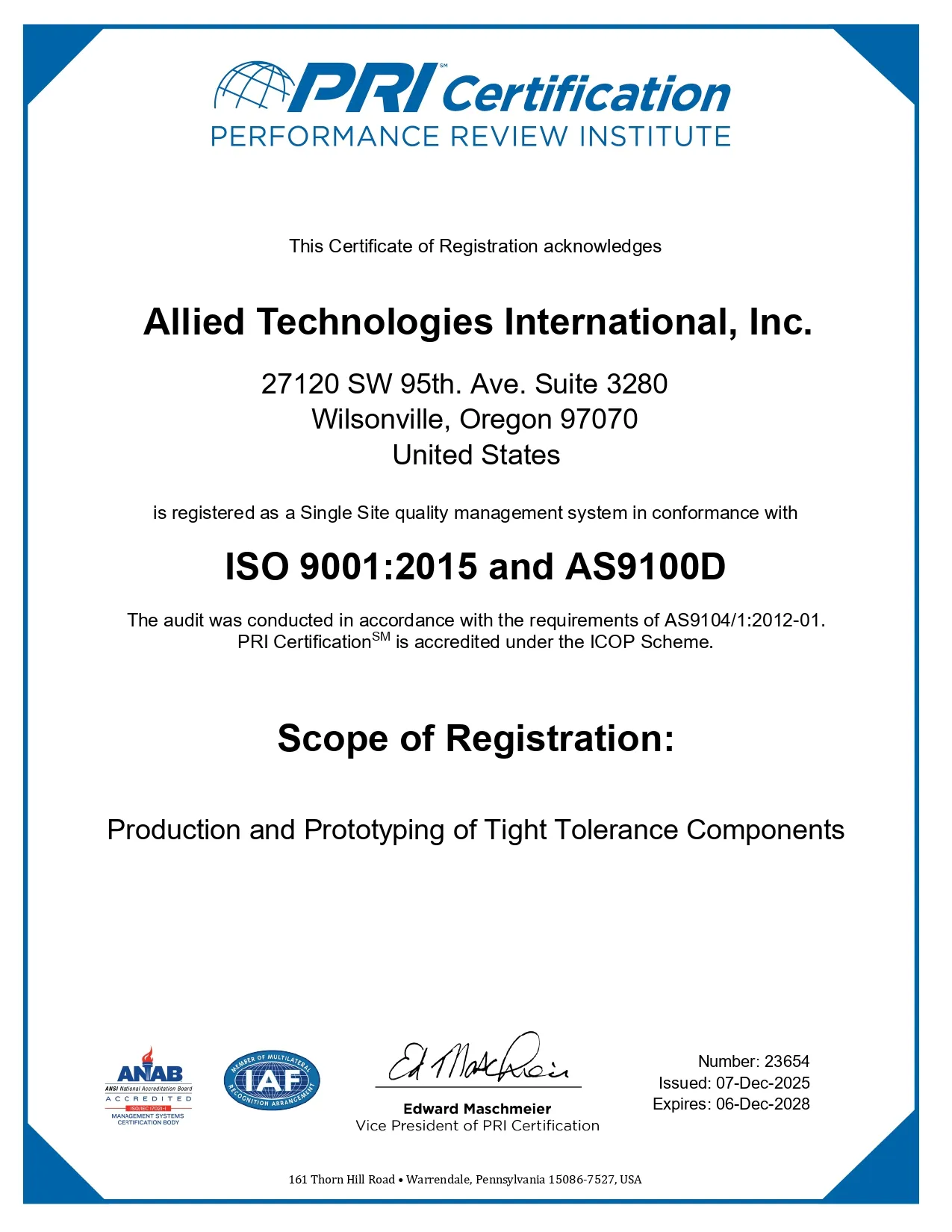
This is particularly significant when manufacturing aircraft and medical devices, since unpredictability cannot be tolerated here. Every piece has to be produced at exactly the same standard. That kind of consistency is exactly what Allied Technologies International focuses on when precision cannot be compromised.
Final Perspective on Their Role in Modern Systems
Most people never think about fasteners when they look at a finished structure or machine, but engineers do. They know that everything depends on those small connection points staying stable under stress, movement, and time.
Industrial fastener manufacturers are what make that possible at scale. They take something simple and turn it into a controlled engineering component that modern construction and advanced systems can actually rely on. Without that, a lot of what we call “modern infrastructure” would not hold together the way it does.
Allied Technologies International works in this space, focusing on precision manufacturing and controlled production processes that support industries where consistency is not optional and failure is not acceptable.
At the end of the day, modern engineering is not defined only by design or materials. It is defined by how well everything stays connected when real-world conditions kick in. That responsibility sits on fasteners and the manufacturers who get them right.
Can your next project afford weak connections at scale?