When people think about aerospace systems or medical devices, they picture engines, robotics, and high-end tech doing the heavy lifting. Nobody really thinks about the fasteners holding everything together. But that’s exactly where things either hold… or fall apart. In these industries, fasteners are not background parts. They’re critical. One weak point, one bad thread, one tiny failure, and the impact doesn’t stay small. It spreads.
That’s why industrial fastener manufacturers matter a lot more than most people realize. They’re not just making hardware. They’re building parts that have to perform under pressure, over time, without slipping once.
The scale is massive, too. The global fasteners market has already crossed $100 billion, and aerospace plus medical demand keeps pushing it higher. One aircraft alone can run on hundreds of thousands of fasteners. That’s not an exaggeration. Every single one has a job. Every single one has to be right.
Why Fasteners Matter More in Aerospace and Medical Work
In a regular setup, a loose fastener is annoying. In aerospace or medical, it’s a problem you don’t want to deal with. Aircraft are constantly dealing with vibration, pressure changes, and temperature swings that would wreck normal components. Medical devices operate in environments where precision is everything, sometimes even inside the human body. There’s no margin for guesswork in either case.
So the expectations change. Fasteners must be more robust, accurate, and reliable than those found in conventional production. Materials are chosen carefully. Tolerances are tight. Surface finishes are controlled down to fine detail.
This is where industrial fastener manufacturers step up. They’re not just producing parts in bulk. They’re engineering them for very specific conditions, where failure isn’t part of the equation.
Types of Industrial Fasteners and Their Uses
On paper, fasteners seem basic. Screws, bolts, pins. Nothing complicated. But once you step into aerospace and medical manufacturing, every one of these becomes more specialized.
- Bolts and screws handle structural loads where strength and stability matter
- Rivets are used for permanent joints, especially across aircraft structures
- Pins and dowels make sure parts align exactly the way they’re supposed to
- Threaded inserts reinforce softer materials so connections don’t fail over time
- Washers help distribute the load and reduce wear under constant stress
Simple list, but the reality behind it is anything but simple.
These are not off-the-shelf parts. Everything gets engineered around the application. Thread pitch, coating, material grade, and tolerance. All of it is dialed in. That’s what defines types of industrial fasteners and their uses in these industries. It’s not about picking parts. It’s about building the right solution.
Industrial Fasteners for Aerospace Applications
Aerospace is where fasteners really get tested.
Inside an aircraft, parts are constantly under stress. Vibration never stops. Temperatures shift fast. Pressure changes are normal. And on top of all that, manufacturers are trying to reduce weight wherever they can.
That combination makes fastener design a balancing act.
Because they provide strength without adding excessive weight, materials like titanium and high-performance alloys are utilized. However, the issue cannot be resolved by materials alone. Precision is what makes those materials work.
That’s why industrial fasteners for aerospace applications are built with extremely tight tolerances. Even a small variation can cause issues when repeated across thousands of connection points.
Consistency becomes everything. You don’t just need one good part. You need every single part to perform the same way, under the same conditions, for a long time.
That’s the standard aerospace operates on.
Industrial Fasteners for Medical Devices
Now shift to medical, and the challenge changes. It’s not just about strength anymore. It’s about control, safety, and precision at a much smaller scale.
Medical fasteners are used in surgical tools, implants, dental systems, and diagnostic equipment. These parts don’t just sit in machines. Some interact directly with the human body.
That raises the bar.
Materials need to be safe. Surfaces need to be smooth. Parts need to handle repeated sterilization without breaking down. And everything has to be consistent from one unit to the next.
That’s what makes industrial fasteners for medical devices so demanding. You’re not just building for performance. You’re building for reliability in sensitive environments.
There’s no room for variation here. Every detail matters.
The Role of High-Precision CNC Fastener Manufacturers
This level of precision doesn’t happen by accident. It comes from the way these parts are made.
High precision CNC fastener manufacturers use computer-controlled machining to produce components with extremely tight tolerances. We’re talking about accuracy down to levels you can barely see.
What that does is remove inconsistency. Once a process is set, every part comes out the same. That’s huge for aerospace and medical applications, where even a slight variation can cause problems.
It also opens the door for custom designs. Companies don’t have to settle for standard parts. They can get fasteners built specifically for their systems.
That’s the real value of CNC manufacturing. It turns precision into something repeatable.
Why Swiss Machining Is a Game Changer
When parts get smaller and more complex, even CNC machining needs support. That’s where Swiss machining comes in.
It’s built for producing small, detailed components with high accuracy. During milling, the setup maintains the material’s stability, which lessens vibration and enhances control.
- Ideal for tiny, high-precision fasteners
- Handles complex geometries without losing accuracy
- Maintains tight tolerances across large production runs
For aerospace and medical work, that level of consistency is a big deal. You’re often dealing with parts that are small but critical. Swiss machining makes sure those parts come out right, every time.
What Sets Serious Manufacturers Apart
Not every manufacturer can meet these standards. It takes more than just equipment.
The businesses that stand out concentrate on material traceability, quality assurance, and process control. They are aware that each fastener is a component of a larger system and that consistency among all of them is essential to performance.
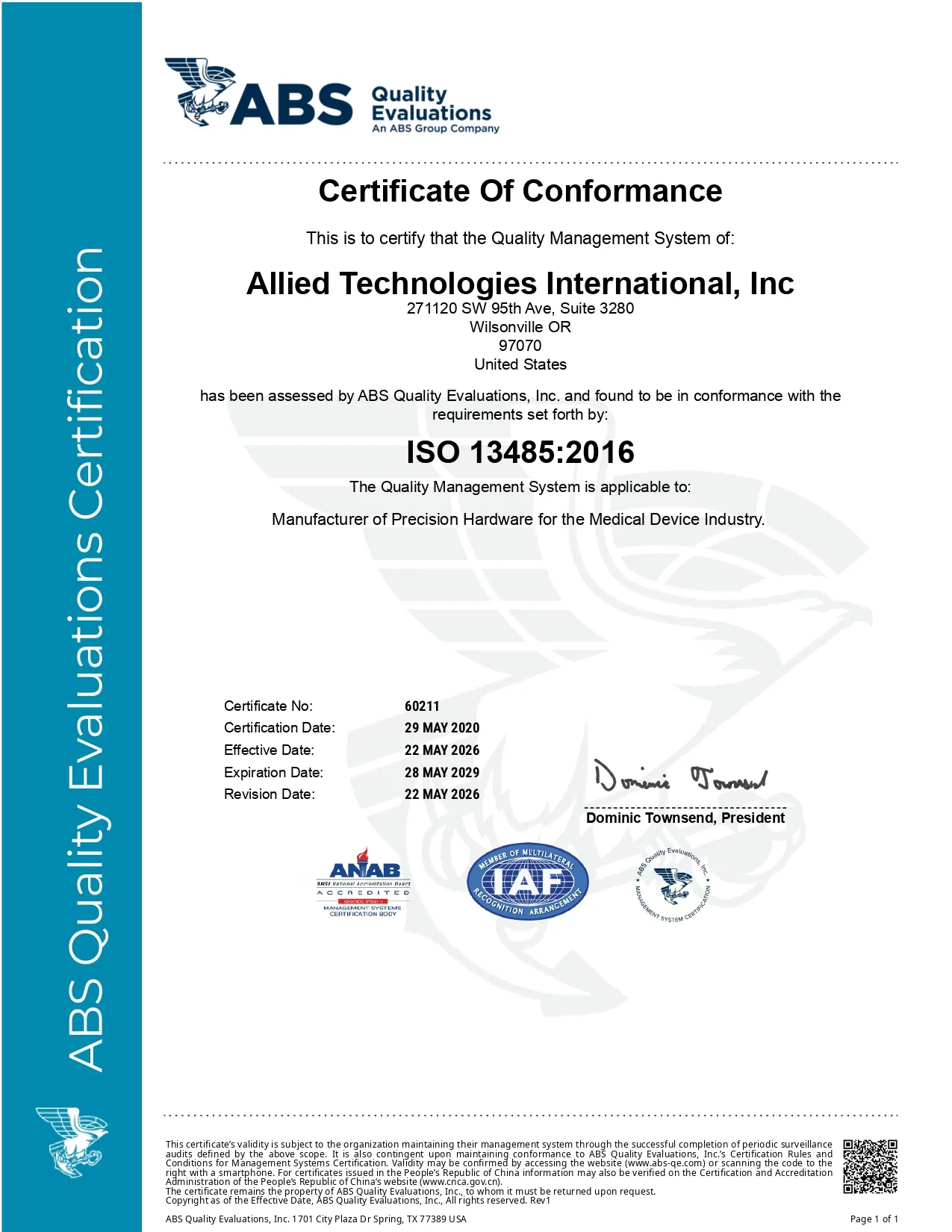
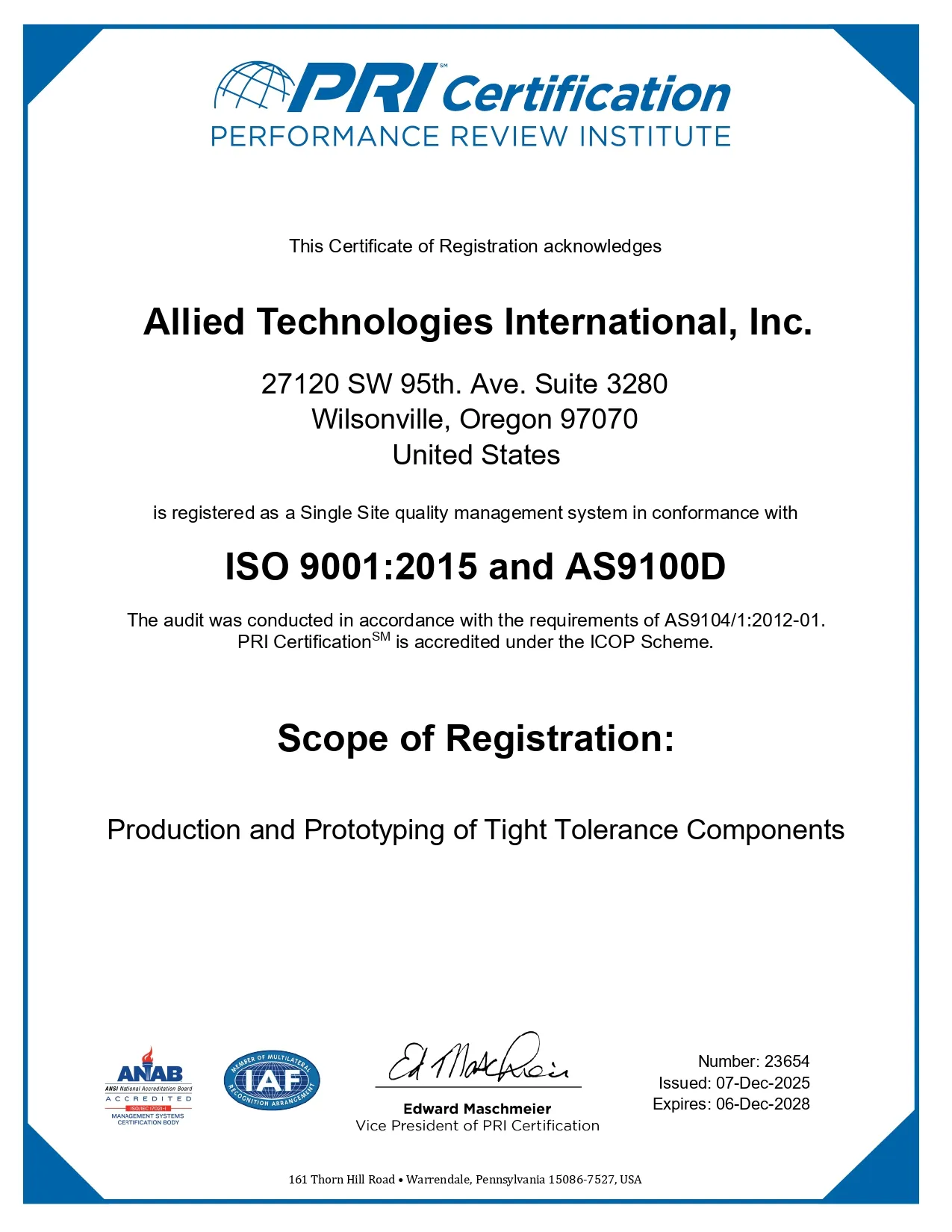
That’s where Allied Technologies International comes in. Not just making parts, but operating at a level where precision, repeatability, and reliability actually mean something.
And that’s what aerospace and medical companies are really looking for.
Final Thoughts
Fasteners are small. No way around that. But in aerospace and medical applications, they carry a level of responsibility most components don’t. They hold systems together under stress, over time, in environments where failure isn’t an option.
As technology keeps advancing, the demand for tighter tolerances and better performance only increases. That puts more pressure on the parts most people don’t even notice.
That’s why industrial fastener manufacturers are more than suppliers. They’re part of the foundation that keeps everything working. If you’re building something where precision actually matters, Allied Technologies International helps make sure the smallest parts don’t turn into the biggest problems.