If you’ve ever worked with tiny precision parts, you know how brutal tolerances can be. We’re not talking about big chunky components here. These are micro parts. A few millimeters long. Sometimes smaller. When tolerances are that close, even the slightest movement can spoil the whole piece.
That’s precisely where CNC Swiss Machining comes into play. This method was designed for small, highly precise parts where precision isn’t merely significant; it’s essential. When components are this tiny, the machine, the arrangement, and the procedure must all function in harmony. The actual question is straightforward. In what way does this machining technique effectively maintain control over tolerances? Let’s break it down.
Why Micro Components Demand Extreme Precision
Minor components lead to significant issues in production. The smaller the part becomes, the less tolerance there is for mistakes. Consider a small fastener within a medical device or a tiny connector utilized in aerospace electronics. Those components may seem unimportant, yet they must align seamlessly with their surroundings. If a single dimension is incorrect, the whole assembly may collapse.
This is why manufacturers depend significantly on CNC Swiss screw machining for creating micro components. These devices were created to maintain stability when operating with very small diameters and exceptionally narrow tolerances Less vibration. Better control. More predictable results. When tolerances are measured in microns, that stability becomes critical.
What Makes Swiss CNC Machining Different
Traditional CNC lathes grip the material in a chuck and machine it from one end. That approach works well for larger components. Micro components are a different story. With Swiss CNC machining, the bar stock feeds through a guide bushing that supports the material right next to the cutting tool. Instead of leaving a long section of unsupported material sticking out, the machine keeps everything supported right where the cutting happens. That one design change solves a lot of problems.
Because the material stays supported near the tool, there is much less bending or vibration during cutting. The tool stays stable. The material stays stable. And the dimensions stay exactly where they’re supposed to be. This is why CNC Swiss precision machining is widely used when manufacturers need reliable accuracy on extremely small parts.
How Swiss Machines Improve Tolerance Control
There are several reasons this machining method works so well for tight tolerance micro components.
1. Reduced Material Deflection
When machining tiny parts, the material naturally wants to flex. Cutting pressure can push the bar stock slightly off position, especially if the material is thin. A CNC Swiss screw machine solves that problem by keeping the material supported very close to the cutting tool. The guide bushing holds the bar steady while the machine works. Less flex means better dimensional control. And better control means tighter tolerances.
2. Continuous Support During Machining
One of the biggest advantages of Swiss machining is constant material support. The guide bushing supports the bar stock throughout the entire cutting process. This is exactly why Swiss CNC machine manufacturers design these systems specifically for micro-component production. When parts are extremely small, even tiny vibrations can create measurement errors. Continuous support keeps everything stable and helps maintain accurate dimensions from start to finish.
3. Multi-Axis Precision
Modern Swiss machines are built to do more than simple turning. Many systems include multiple axes and tool stations, which means several machining operations can happen during the same production cycle. Turning, drilling, milling, and threading can all be completed without removing the part. That is why many companies turn to Swiss CNC machine contract manufacturers when they need complex precision components. Fewer setups reduce the risk of alignment issues and dimensional inconsistencies. And fewer errors mean better tolerance control overall.
4. Consistency at High Volumes
Another big reason companies choose Swiss machine contract manufacturing services is repeatability. Once a Swiss machine is dialed in properly, it can run thousands or even millions of parts with the same dimensional accuracy. The first component and the last component will match. This level of consistency is exactly what manufacturers expect when working with custom Swiss CNC contract manufacturers that specialize in precision micro components. When you’re producing parts for industries like aerospace or medical devices, every single piece has to meet strict quality standards.
Ideal Applications for Swiss CNC Machining
Swiss machining center really shines when parts are small, detailed, and tolerance sensitive.
Common applications include:
- Medical device components
- Aerospace fasteners
- Precision electronic connectors
- Micro shafts and pins
- Small threaded hardware
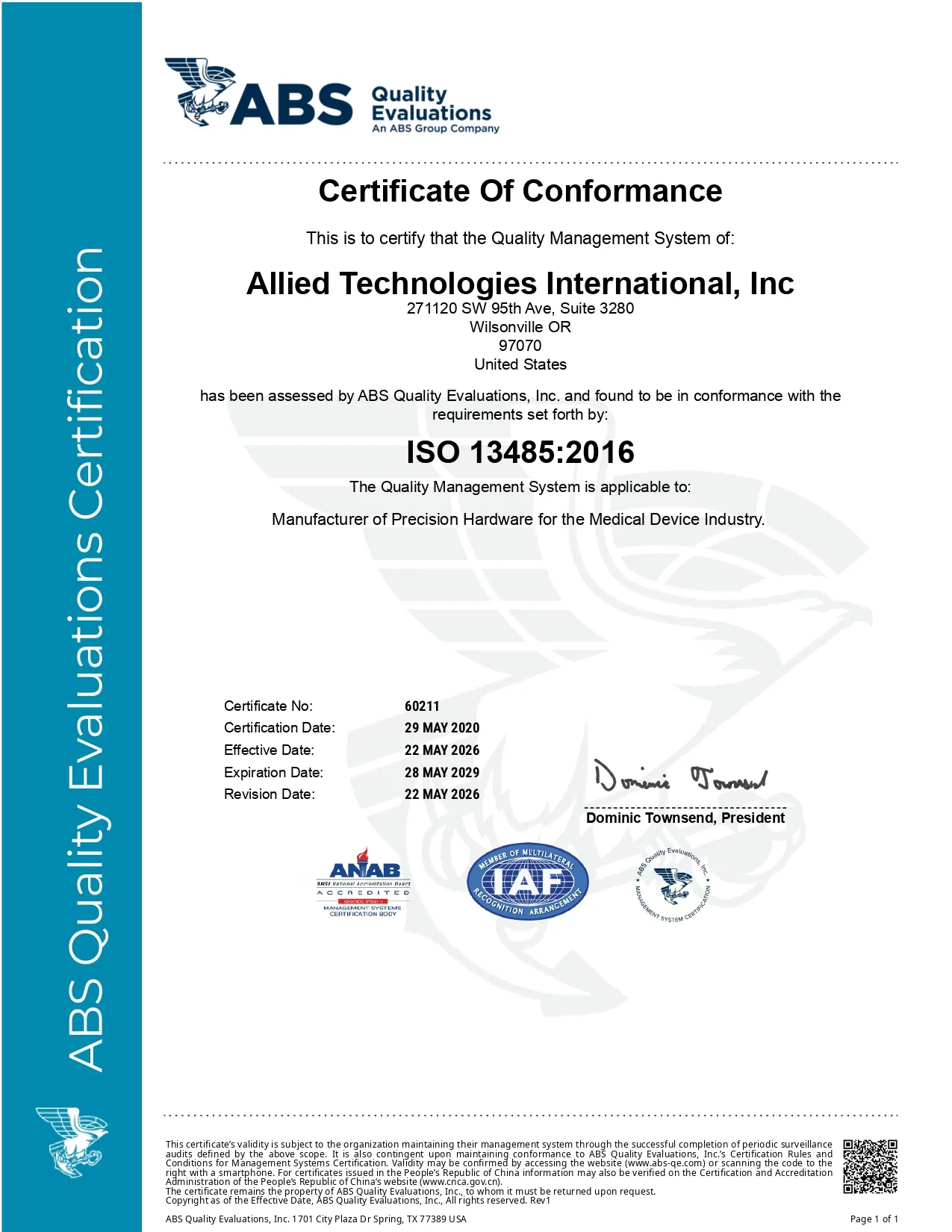
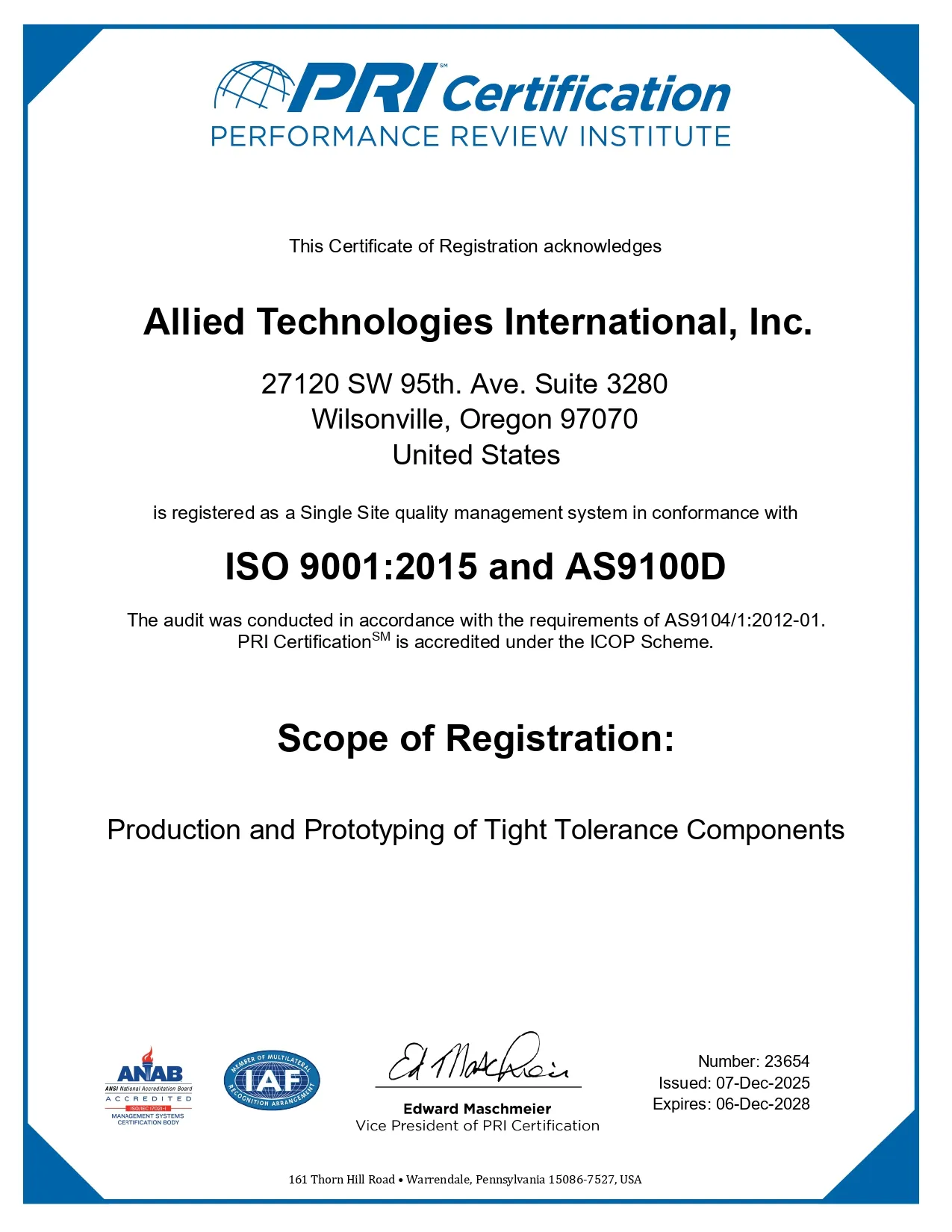
Producing parts like these requires both advanced equipment and experienced machinists. That’s why many companies partner with specialists like Allied Technologies International when they need reliable micro-component manufacturing.
Why Experience Still Matters
Even with advanced machines, precision machining is never just about the equipment. Programming techniques, tool selections, cutting rates, and process improvements all influence the final component. Minor modifications can significantly impact dimensional precision and surface quality. This is why firms that create tight-tolerance components frequently depend on skilled manufacturers such as Allied Technologies International, who know how to execute Swiss machining methods effectively and reliably.
The Bottom Line
Micro components allow for very little margin of error. When components are measured in millimeters or even microns, the precision of manufacturing becomes extremely essential. Swiss CNC Machining addresses this issue by maintaining the material near the cutting tool, minimizing vibration, and enabling various machining processes within one setup. The result is tighter tolerances, consistent production, and reliable micro components. For companies that depend on high-precision manufacturing, working with experienced partners like Allied Technologies International can make a real difference.
Need micro components manufactured with tight tolerance control?
Work with Allied Technologies International to explore advanced Swiss machining solutions designed for demanding industries.