If you’ve ever held a part that almost fit but didn’t, you already understand why CNC precision turning matters. On paper, the difference might be a few microns. In real life, those microns decide whether a product works, fails early, or never ships at all. CNC precision turning isn’t flashy. It doesn’t get the same attention as new product launches or big design wins. But behind the scenes, it’s doing the heavy lifting. Especially when you’re under pressure to move fast, hit tolerances, and still keep costs sane. That’s where quick turn CNC machining and precision turning really earn their keep. Let’s break it down in simple words: what it is, why it improves part performance, and why companies that skip corners here usually pay for it later.
What CNC Precision Turning Really Is
CNC precision turning is a subtractive manufacturing process where material is rotated while a cutting tool shapes it to exact dimensions. Sounds simple. It’s not. What makes it “precision” is control, tight tolerances, repeatability, and a surface finish that stays consistent from part one to part ten thousand. Swiss-style turning takes this even further by supporting the material closer to the cut, which reduces vibration and allows for smaller, more complex geometries.
When done right, CNC precision turning produces parts that:
- Fit exactly where they’re supposed to
- Wear evenly over time
- Perform the same way every single cycle
That consistency is performance. Not marketing fluff, but actual, measurable performance.
Why Part Performance Starts at the Machining Stage
A lot of teams focus heavily on design (as they should). But even a great design can fall apart if machining quality isn’t there. Here’s how CNC precision turning directly affects how a part behaves in the real world.
1. Tighter Tolerances Mean Better Fit and Function
Loose tolerances lead to movement, vibration, leaks, and premature wear. Tight tolerances don’t.
With CNC precision turning, you’re holding dimensions that manual machining simply can’t touch consistently. This is critical for parts used in:
- Medical devices
- Aerospace assemblies
- Precision fasteners
- Fluid control systems
When tolerances are right, parts align properly. Loads are distributed evenly. Assemblies don’t fight themselves during operation. That’s how performance improves quietly, without drama.
2. Surface Finish Affects More Than Looks
Surface finish isn’t cosmetic. It impacts friction, sealing, corrosion resistance, and fatigue life.
Precision turning delivers controlled finishes that reduce:
- Friction between mating parts
- Stress risers that cause cracks
- Wear caused by rough contact surfaces
In high-cycle environments, this can be the difference between a part lasting years or failing way too soon. And yes, it matters even more when parts are small.
3. Material Integrity Stays Intact
Poor machining introduces heat, chatter, and internal stresses. Over time, those stresses show up as warping, cracking, or unpredictable failure. Precision CNC turning uses stable cutting parameters, sharp tooling, and proper support to keep material properties intact. That means:
- Better fatigue resistance
- More predictable strength
- Reliable performance under load
This is especially important for stainless steel fasteners and complex Swiss-machined components. Allied Technologies International has been solving this exact problem since 1992. With deep experience in CNC precision turning and fast-response, quick-turn CNC machining, ATI helps teams move from “almost right” to production-ready without endless rework.
4. Consistency Beats Speed, But You Can Have Both
Speed without control is just expensive chaos. But precision turning done right doesn’t slow you down. With modern CNC systems and experienced operators, you can hit tight tolerances and meet aggressive timelines. That’s where quick-turn CNC machining becomes a serious advantage.
Instead of:
- Long back-and-forth revisions
- Delayed prototypes
- Production bottlenecks
You get:
- Fast quoting
- Early manufacturability feedback
- Parts that work the first time
ATI’s global presence in the U.S., China, and India enables production to move to where capacity is available without sacrificing quality. That’s speed with a safety net.
5. Better Machining Reduces Downstream Costs
Here’s the part nobody likes to admit: cheap machining is rarely cheap.
Poor precision leads to:
- Assembly issues
- Scrap and rework
- Field failures
- Warranty claims
CNC precision turning minimizes those risks upfront. When parts are right the first time, everything downstream gets easier. Assemblies go together faster. Quality checks pass. Customers don’t call with problems six months later. That’s performance from a business standpoint, not just engineering.
Why Quick Turn CNC Machining Changes the Game
Product timelines aren’t getting longer. If anything, they’re getting tighter. Quick-turn CNC machining fills the gap between design and production without forcing compromises.
At ATI, quick turn doesn’t mean rushed. It means:
- Streamlined workflows
- Multi-site capacity planning
- Real-time production monitoring
- Engineering support that actually responds
When designs change (and they always do), the ability to pivot fast while holding precision is huge. It keeps launches on track and teams sane.
Risk Management Isn’t Optional Anymore
Supply chains break. Machines go down. Regions shut off unexpectedly. ATI’s approach to CNC precision turning and quick-turn CNC machining is built with redundancy baked in. Multiple facilities. Multiple vendors. Real-time analytics. Safety stock where it makes sense. This isn’t overkill; it’s how you keep production moving when something goes sideways. And yes, it directly impacts part availability and performance in the field.
Certifications Matter Because Failure Isn’t an Option
Precision turning for medical, aerospace, and defense work demands proof, not promises.
ATI operates under:
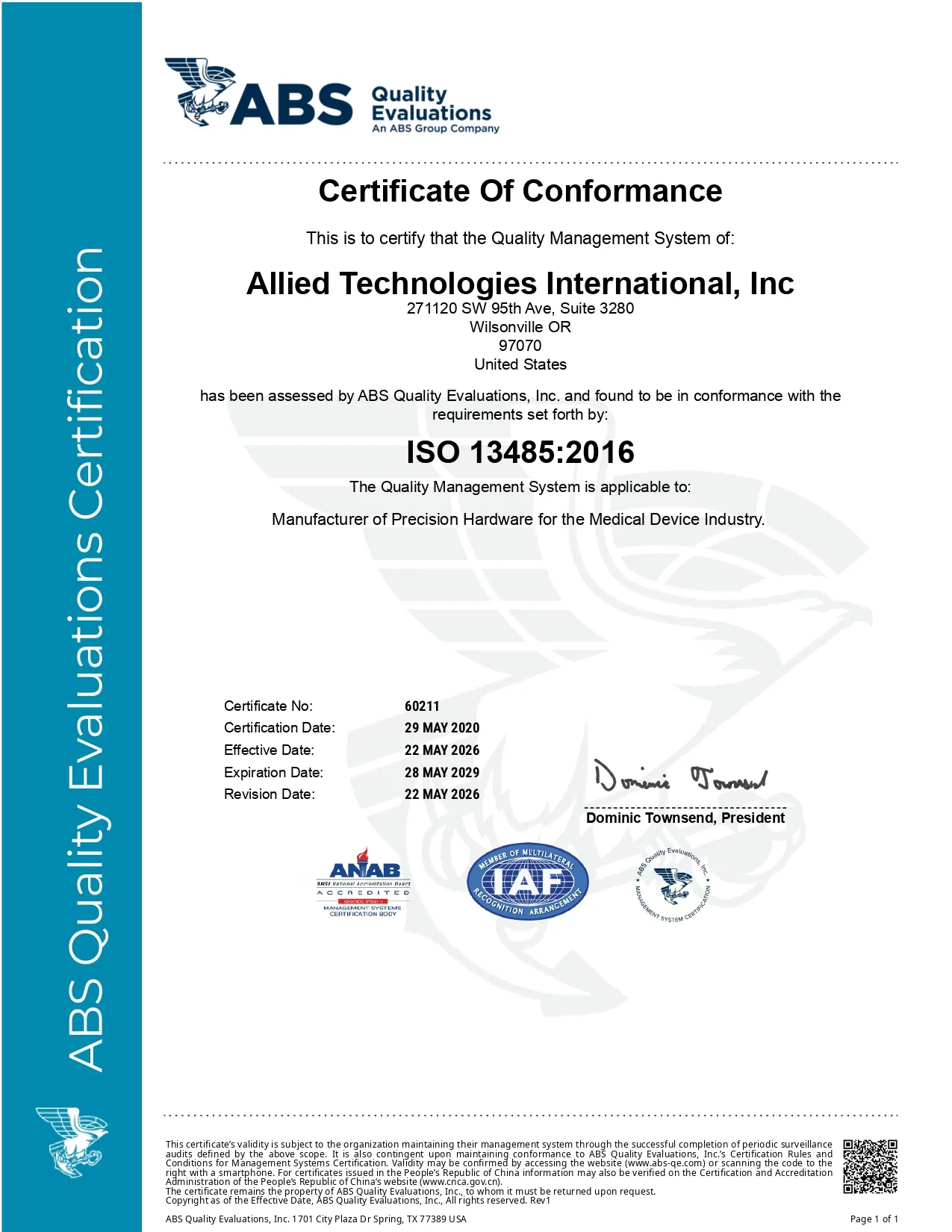
- ISO 13485 for medical manufacturing
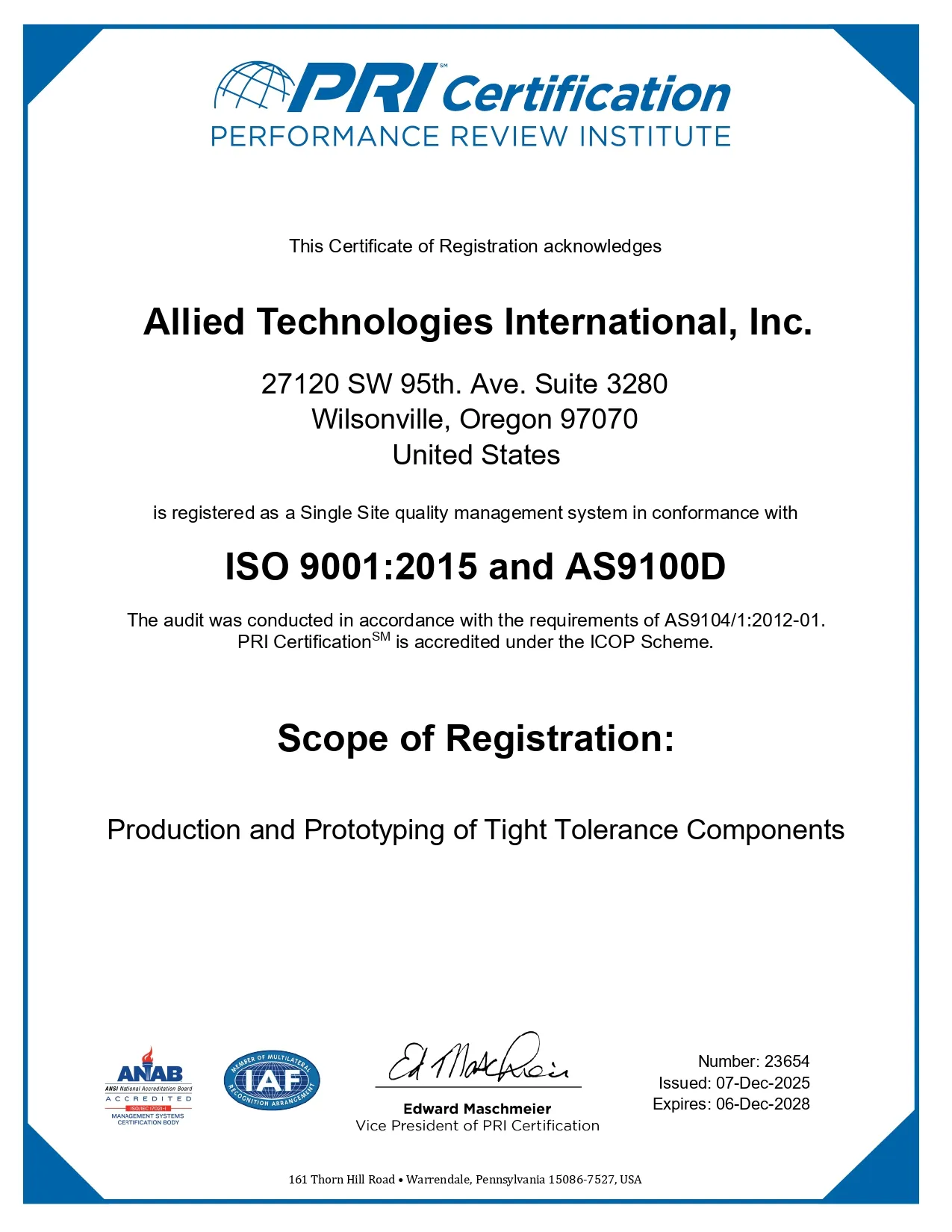
- AS9100D for aerospace
- ISO 9001:2015 across facilities
- FDA registration and ITAR compliance
These aren’t wall decorations. They enforce discipline, traceability, and process control that show up in the final part.
CTA
If you’re tired of parts that almost work or suppliers who can’t keep up when timelines shrink, it might be time to rethink who’s doing your machining. Allied Technologies International delivers CNC precision turning with the speed of quick-turn CNC machining without cutting corners.
Final Thoughts
CNC precision turning isn’t just about hitting numbers on a drawing. It’s about how a part behaves after thousands or millions of cycles. It’s about consistency, reliability, and confidence when products leave your door. When you combine that precision with fast, flexible manufacturing, you don’t just build parts. You build momentum. And that’s hard to put a price on.