If you’ve worked with Swiss turn parts, you already know how tight this game is. We’re talking tolerances that leave no room for “close enough.” These parts end up in aerospace systems, medical tools, and electronics. If something drifts, it’s not a small problem. That’s why automation isn’t optional anymore. It’s what keeps the process from falling apart once volume goes up or complexity kicks in. It controls the variables that usually cause issues and keeps things consistent from the first part to the last.
It Starts with Machine Architecture and Control
Swiss machines are built for precision from the ground up. The guide bushing supports the material right near the cut, which keeps it stable and reduces deflection. That’s how shops hold tolerances as tight as ±0.0002 inches on long, slender parts. Automation takes that base and makes it repeatable. Modern CNC systems are running multiple axes, spindles, and live tools at the same time. The main spindle handles the front, the sub spindle takes over for back-end work, and everything happens in one continuous cycle. You’re not just making a part. You’re finishing it in one shot. Automation keeps every movement in sync. No lag, no missed timing. That matters when you’re cutting micro features or trying to maintain concentricity across multiple operations. It’s a big part of why Swiss screw machining can scale without losing accuracy.
Tool Life Management Is a Big Deal
Tool wear is one of those things that quietly ruins parts if you don’t stay on top of it. It doesn’t hit all at once. It builds up, and before you know it, dimensions are drifting. Automation takes that guesswork out. Machines track tool life based on actual cutting conditions like load, runtime, and cycle count. When a tool is close to wearing out, the system flags it or swaps it automatically. That alone can cut dimensional variation by a noticeable margin. This becomes even more important when dealing with different materials used in Swiss turn parts. Stainless steel generates heat. Titanium wears tools faster. Brass is easier to cut but still needs control to avoid burrs. Automation keeps those differences from turning into inconsistent results.
Closed-Loop Feedback Keeps Tolerances Tight
This is where things get more controlled. Instead of waiting until parts are finished to check quality, modern machines measure during the cut. Probes and sensors capture dimensions in real time and feed that data back into the system. If something starts drifting, the machine adjusts offsets right away. That can reduce scrap by up to 30 percent in high-precision runs. More importantly, it keeps parts within tolerance across the entire batch, not just at the start. If you’re building a precision Swiss turned components guide, this is one of the first things worth asking about. Not every shop is running this level of control.
Multi-Operation Efficiency in a Single Setup
One of the biggest advantages of Swiss machining is how much can be done in one setup. Automation makes that reliable. A single cycle can handle turning, drilling, milling, threading, and parting. Then the sub spindle takes over to finish the back side.
- Fewer setups mean fewer chances for misalignment
- Less handling reduces the risk of damage
- Tighter control across all features
- Production time can drop by 30 to 40 percent
That’s why custom Swiss turn parts with complex geometries are easier to produce now. Everything stays aligned because it all happens in one controlled cycle.
Process Stability Across High Volumes
Making a few good parts is easy. Keeping that same quality across thousands is where things usually break. Automation is what keeps it steady. Bar feeders keep material flow consistent. Coolant systems control temperature so parts don’t shift from heat. Chips are cleared before they interfere with cutting. Machine loads are monitored to catch anything unusual. All of this runs in the background, keeping the process stable. In well-automated setups, shops can hit over 95 percent repeatability across long production runs. That level of consistency is what defines strong precision Swiss turn parts services.
Surface Finish and Micro-Level Accuracy
Surface finish is not just about looks. It affects how the part actually works, especially in sealing or moving applications. Automation keeps cutting conditions consistent. Feed rates, speeds, and tool engagement stay stable, which reduces vibration and chatter. That’s how shops hit surface finishes below 16 microinches Ra in many cases. Without that consistency, you end up chasing defects after the fact. Automation prevents them from happening in the first place.
Expanding the Applications of Swiss Turn Parts
Automation has pushed Swiss machining into more industries.
- Medical parts are getting smaller and more complex
- Aerospace needs lightweight components with tight tolerances
- Electronics demand high-precision connectors in compact designs
- Industrial systems need durable parts that hold up under stress
These growing applications of Swiss turn parts all demand the same thing. Consistency at scale. Automation is what makes that possible.
Data, Traceability, and Process Documentation
Automation also changes how production data is handled. Machines track cycle times, tool usage, dimensions, and performance automatically. That data is stored and can be reviewed anytime. For regulated industries, this is critical. You need traceability. You need to know how a part was made and whether it stayed within spec the entire time. Automation makes that process cleaner and more reliable, while also giving manufacturers real data to improve performance over time.
Where Automation Still Needs Human Expertise
Automation handles execution, but it does not replace experience. Programming complex parts, choosing tooling, and optimizing cutting strategies still require skilled people. Machines don’t make those decisions. Automation runs the process. People build it. The best results come when both are working together.
Final Thoughts
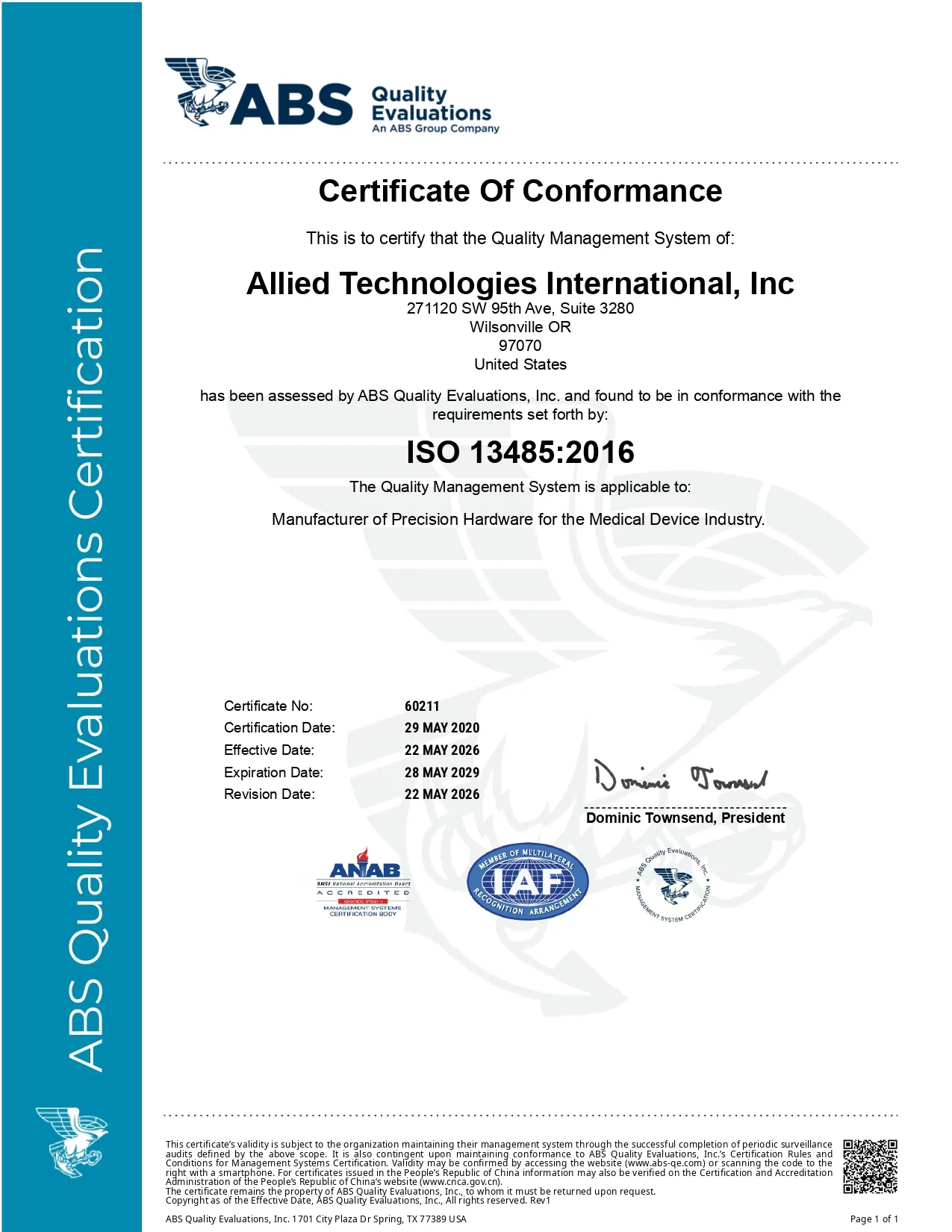
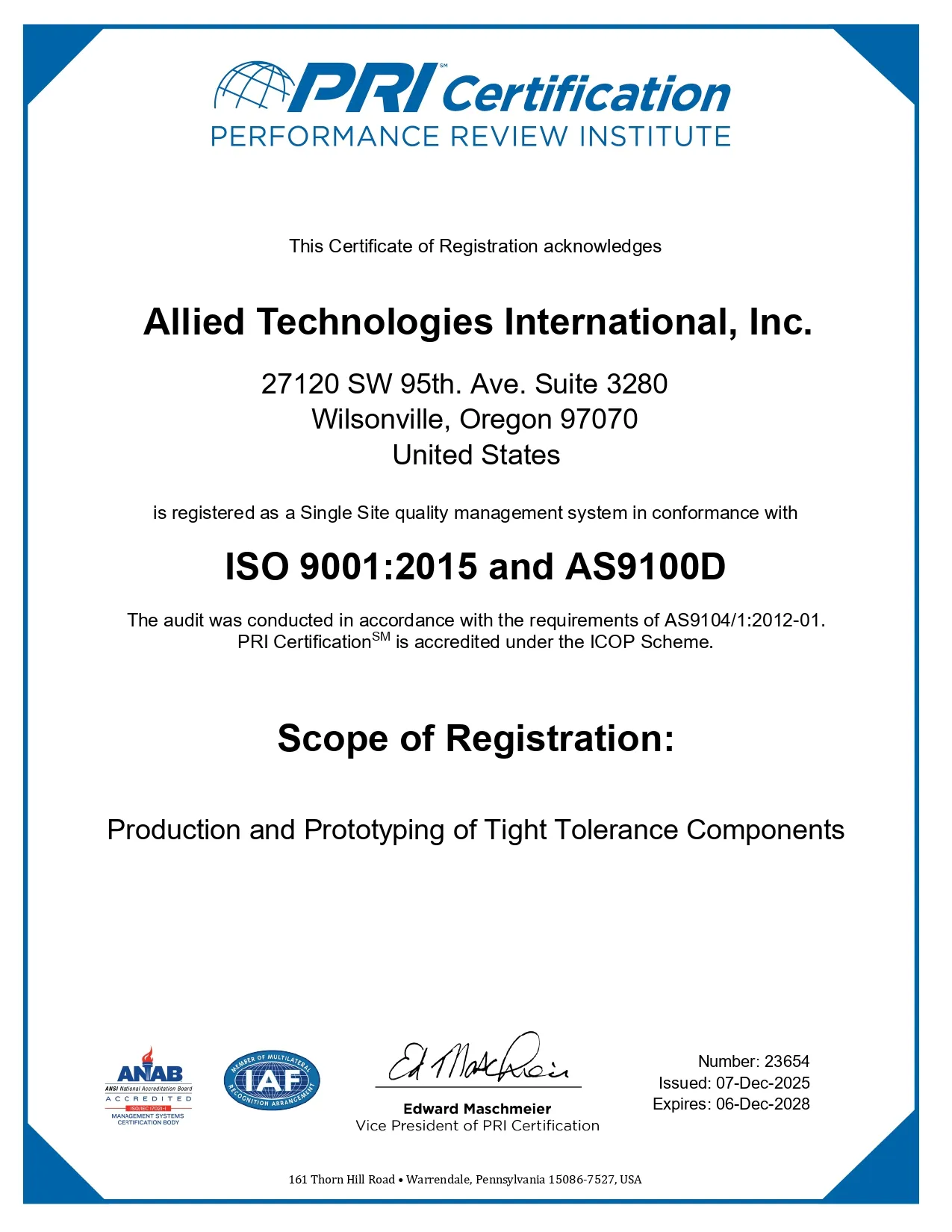
Automation has changed how Swiss turn parts are produced by making the process more controlled and more predictable. It keeps variation in check and allows manufacturers to scale without losing precision. That’s what matters in this space. Allied Technologies International builds automation into its Swiss machining processes to maintain consistency across both prototype and production work. The focus stays on control, because that’s what keeps parts within spec. If you’re sourcing custom components or scaling production, Allied Technologies International is set up to deliver precision without things slipping as volume increases.
Ready to stop worrying about part consistency?