Manufacturing moves fast, and if you aren’t upgrading your gear, you’re basically falling behind. It’s a brutal environment for any shop owner trying to keep up. Everything is changing, from tiny medical sensors to massive jet engine parts. Old ways just don’t work anymore when the stakes are high, and your tolerances are paper-thin.
Using a Swiss machining center helps shops bridge that gap. It allows us to turn out parts with incredible speed and accuracy, meeting the wild demands of today’s tech-focused world.
The Shift Toward Precision and Speed
Why are manufacturers switching gears? It boils down to tighter tolerances and much shorter deadlines. Clients want parts that fit perfectly every single time, and they want them delivered yesterday. Advanced equipment is the only answer.
A high-tech Swiss machining center in a USA facility handles complex geometry that standard lathes would struggle to touch. You can work on multiple sides of a part without moving it to a different machine, which saves massive time.
- Consistent accuracy is achieved through advanced thermal stability controls that fight off heat.
- Reduced downtime is possible via automated tool monitoring systems that catch issues early.
- Shops now handle difficult exotic metals like titanium or medical-grade PEEK with ease.
- Faster cycle times for small diameter parts keep your throughput moving at a high clip.
Why Swiss Screw Machining Changes Everything
The secret sauce behind these machines is the sliding headstock. It supports the material right where the cutting tool meets the metal. This setup stops the part from vibrating or bending during the cut.
This makes Swiss screw machining a top choice for delicate medical implants or tiny sensors. You get a perfect finish without the need for secondary polishing steps. It saves you massive amounts of time and labor.
- Better surface finish quality on thin, long parts that usually chatter.
- Elimination of metal whip in long, slender materials by using a guide bushing.
- Multi-axis movement allows for incredibly intricate shapes that one-off milling can’t do.
- Advanced coolant management systems prevent tool wear and extend the life of your inserts.
Staying Competitive with High-Volume Production Machining
Staying relevant in the states requires serious efficiency. You cannot waste skilled labor on manual setups anymore. Modern shops rely on high-volume production machining to keep costs low while output stays high for their customers.
Everything runs through a Swiss turning center with minimal human intervention once the job kicks off. You load the bar, hit start, and let the sensors and computers do the heavy lifting for you while you focus on planning.
Automation is the real secret. When your machines run 24/7 without a break, you start seeing real profits. You move from constantly fighting fires to actually growing your business in a smart, calculated way.
Getting Into the Details of Swiss Machining
When you look at Swiss machining, you see a total focus on microscopic detail. These parts often go into life-saving equipment or advanced satellites. There is no room for a loose measurement here. One bad part can ruin a project.
You also need to think about the software behind the hardware. Modern machines talk to CAD systems directly. This removes the risk of human error when punching in long strings of coordinates or confusing math formulas.
Everything works in sync. The machine knows exactly where the tool is down to the micron. It is honestly impressive to watch one of these work in person, turning raw bars into finished parts in minutes.
The Power of Bar-Fed Machining Systems
Handling raw materials can be a real headache if you do not have the right flow. That is why bar-fed machining systems are so popular in modern, busy shops. They keep the metal moving steadily into the machine.
You aren’t stopping every twenty minutes to swap out a bent rod. You can set up a rack, walk away, and handle other work while the metal keeps turning. It keeps your spindles spinning, which is the only way to make money.
This creates a smooth pipeline for your entire shop floor. Efficiency is not just about raw speed. It is about keeping the spindles turning as many hours as possible without stopping for small, preventable setup tasks.
Why Precision Turned Components Matter
The final piece of the puzzle is the finished part itself. Precision turned components need to be reliable because they are usually hidden deep inside larger assemblies. If a small part fails, the whole system goes down hard.
We see this daily with aerospace precision parts. Reliability is the only metric that matters when someone is flying thirty thousand feet in the air. You cannot afford a failure in that environment, period.
Modern shops prioritize quality management alongside raw output. It is a balancing act that requires top-tier operators and the latest digital feedback loops. You need sensors that detect when a tool is getting dull before it ruins a part.
How Allied Technologies International Delivers
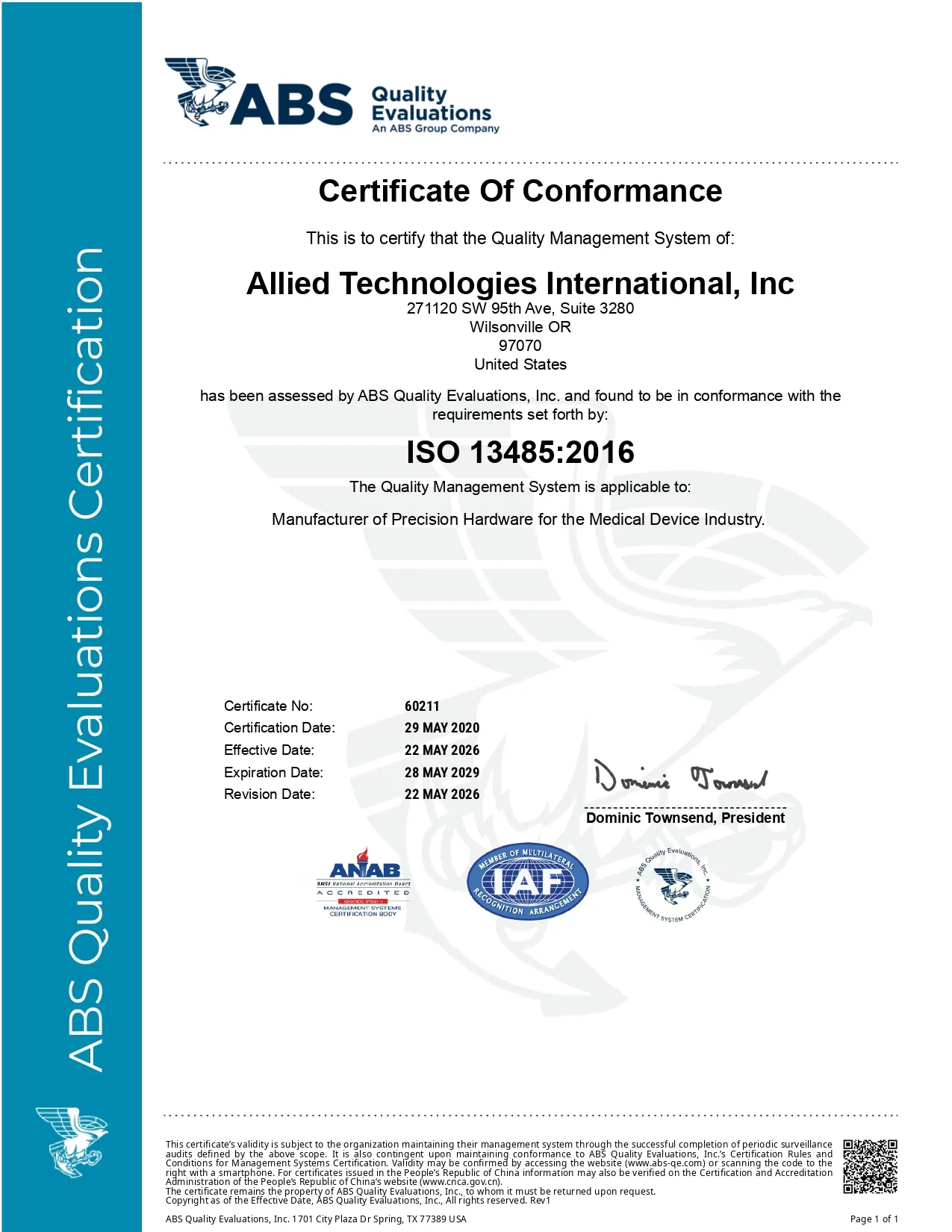
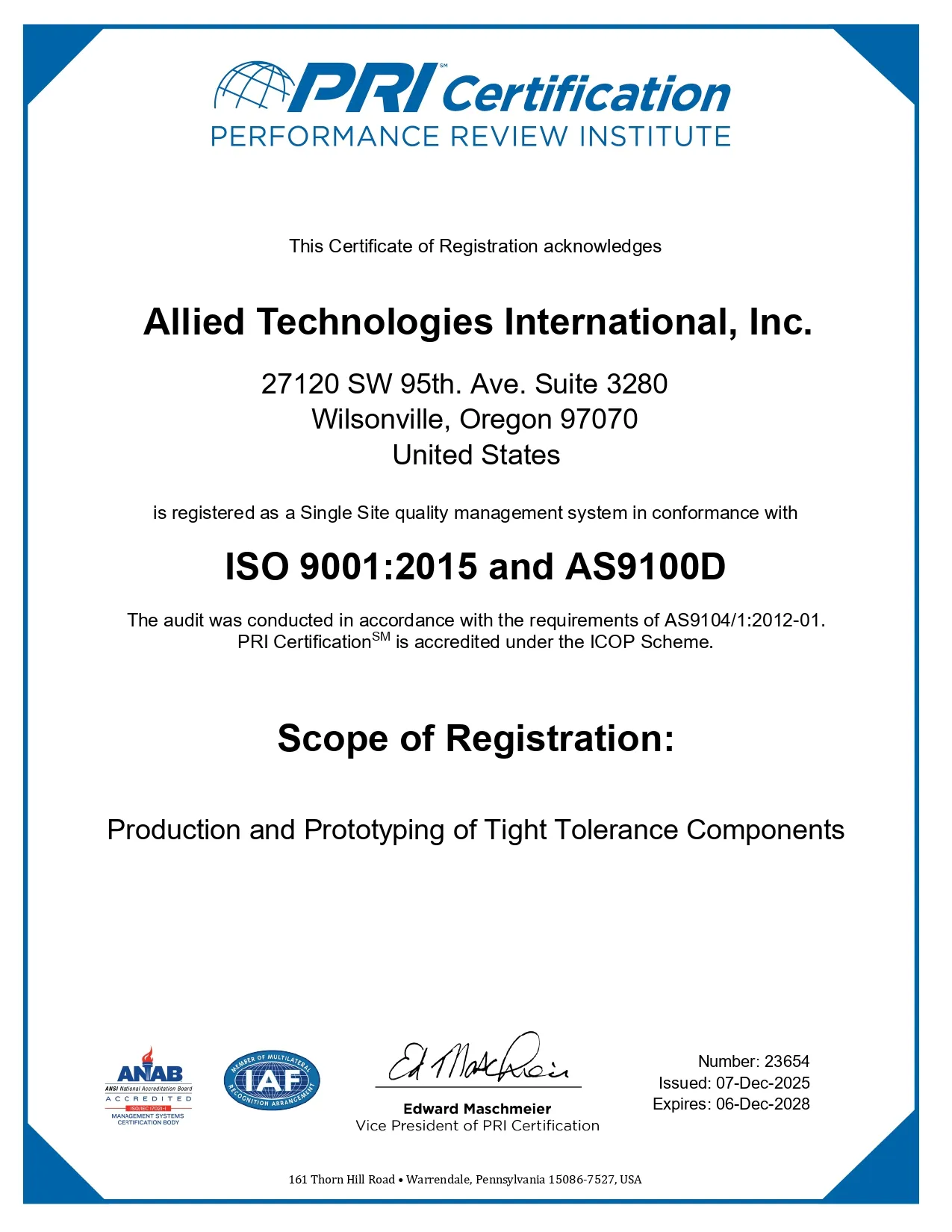
At Allied Technologies International, we know the weight of these demands better than anyone. Our team uses every modern tool available to ensure your components meet exact specs every single time.
We bridge the gap between complex engineering designs and high-quality physical reality. Our focus is on helping you succeed through precision and reliability.
Conclusion
Manufacturing today is a high-speed game of precision. You have to be quick but also perfect. That is the only way to satisfy clients in tough industries that demand zero room for error.
Technology helps us get there. From automated bar feeding to advanced software, the tools exist to make the impossible look easy. You just need the right team behind the machine.
We hope this gives you a better grasp of how shops manage these big demands. If you have a complex project, look for partners who understand the real value of equipment and control.
If your next project requires unmatched precision, reach out to Allied Technologies International to see how we can help.